School Field Trip
I woke that morning excited because today was our school field trip. We were going to spend the rest of Friday, all of Saturday, and a little bit of Sunday at Rock Lodge, Okahandja. Okahandja is about an hour away from Windhoek.
THE TRIP:
Day 1
I made it through English and I.T. my first two classes, but when math came along, I thought I might die. My math teacher Ms. Laura-Ann Rainy gave us home work!! On a Friday and on the day of our Field trip!! When we left math we went to our other homeroom teacher’s room (we have two homeroom teachers Ms. Madri and Mr. Buckland) and we got our bags that we dropped off that morning and headed for the bus that we were going to take to Rock Lodge. Mr. Manley (the elementary school’s principal) drove the bus. When we got to the lodge we drove to our bungalows and put our bags inside on the beds that we choose. I shared a bed with my friend Jonny.
After we put our bags away, we went to the ‘hall’ to play a few games. The first game was involved hula hoops and we had to get them to the ground by using just our index finger. All the girls were on one team and all the boys were on another. We lost the first challenge. The second challenge was everybody had to join hands and then everybody had to go through the hula hoop without breaking the joined hand circle and the team in which everybody had gone through the hula hoop won. We lost…..again. The last challenge was an all-against-all. You had one stone and you had to tell a random person a truth and a lie and they had to choose which the truth was. If they chose the lie then they lost their stone and you got it. If they picked the truth then you lost your stone and the other person got it. I lost. Then we broke into teams and we came up with names. The team I was on was the El-Tigres, Kitty Got Claws!! After each team made their names and mottos, we presented them to one another. The other team’s name was The ASSASSINS We Kick A…! Then we went to an obstacle course which had a lot of puzzles in it. The first one we did was one where you had to move the tires with numbers on them to 3 poles. You couldn’t put a tire with a bigger number than the one under it. You could only move one tire at a time and all the tires had to end up on a certain pole in number order, 1-5. Then, we had to make a bridge over a pit of lava (sand.) Then, there was an obstacle course with platforms and you had 2 logs and you had to get across without touching the ground. Finally, there was a course that wasn’t really a course, it was rope tied around a big square made out of wood and was made to look like a spider web, and what you had to do was get through the spider web without touching the rope. After that we went back to camp to have dinner.
We had a variety of things for dinner like, mystery meat, rice, corn, and peas. About an hour after dinner, we all gathered in the hall to watch a movie, Radio. When the movie was over me and five other people were left. Me and My two male friends (the girls had their separate rooms) walked back to our room and went to sleep.
Day 2
When I got up in the morning it was cold. I got changed and went to get my breakfast. Turns out we had to find our breakfast. We split up into our teams and went on a search. The other team got there first, but everybody got to eat sandwiches with only butter, butter and honey, butter and peanut butter, and butter and jelly. They also had apples. I preferred the butter and jelly.
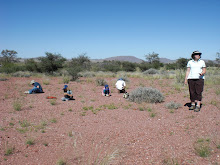
After breakfast we went back to camp to go on a hunt for 15 words in the bush. Our team found seven and the other team only found 2 or 3. Then some people wanted to go swimming before lunch. Now you must keep in mind that it is the beginning of winter and the water is freezing. One of my classmates/friends Kastriot from Kosovo was riding on the back of Ms. Madri to the pool so me and Rachel (we both had cameras) filmed him riding to the pool and when Ms. Madri was about to throw him in, Kastriot held on to her and they both went in and I caught it on film. Then some boys picked me up and luckily they took all the valuable stuff off of me and then threw me in. I made Rachel film me. Then we had spaghetti bolognaise for lunch. It was O.K. Next, we went do an obstacle course that was supa-dupa-lupa-oopa hard. Then, after that, we went ab sailing as the Namibians call it, but we know it as rappelling. It was fun except for the part where I waited for 2 hours in the cold wind with only 1 person with me and my camera was out of battery so my friend couldn’t take a picture of me. When I went back the other people were getting ready for dinner which we had to cook ourselves. It was borevors and bread that no one managed to cook fully. After dinner we had this improv talent show. Then we went to bed.
Final Day
We woke up in the morning to the sound of our camp counselor kicking open the door and shouting that it was 9:00 when it was only around 6:00. We packed up everything and put it by the bus and then sat around the still hot ashes from previous night and waited for breakfast. We had the butter sandwiches for breakfast. Then we boarded the bus at around 9:00 and drove back to the school. When we got there we said: “See ya tomorrow,” because it was Sunday. I went pick up my bag at Ms. Madri’s classroom and then went home.
It was the best field trip ever in the history of Mars!!!!!
I woke that morning excited because today was our school field trip. We were going to spend the rest of Friday, all of Saturday, and a little bit of Sunday at Rock Lodge, Okahandja. Okahandja is about an hour away from Windhoek.
THE TRIP:
Day 1
I made it through English and I.T. my first two classes, but when math came along, I thought I might die. My math teacher Ms. Laura-Ann Rainy gave us home work!! On a Friday and on the day of our Field trip!! When we left math we went to our other homeroom teacher’s room (we have two homeroom teachers Ms. Madri and Mr. Buckland) and we got our bags that we dropped off that morning and headed for the bus that we were going to take to Rock Lodge. Mr. Manley (the elementary school’s principal) drove the bus. When we got to the lodge we drove to our bungalows and put our bags inside on the beds that we choose. I shared a bed with my friend Jonny.
After we put our bags away, we went to the ‘hall’ to play a few games. The first game was involved hula hoops and we had to get them to the ground by using just our index finger. All the girls were on one team and all the boys were on another. We lost the first challenge. The second challenge was everybody had to join hands and then everybody had to go through the hula hoop without breaking the joined hand circle and the team in which everybody had gone through the hula hoop won. We lost…..again. The last challenge was an all-against-all. You had one stone and you had to tell a random person a truth and a lie and they had to choose which the truth was. If they chose the lie then they lost their stone and you got it. If they picked the truth then you lost your stone and the other person got it. I lost. Then we broke into teams and we came up with names. The team I was on was the El-Tigres, Kitty Got Claws!! After each team made their names and mottos, we presented them to one another. The other team’s name was The ASSASSINS We Kick A…! Then we went to an obstacle course which had a lot of puzzles in it. The first one we did was one where you had to move the tires with numbers on them to 3 poles. You couldn’t put a tire with a bigger number than the one under it. You could only move one tire at a time and all the tires had to end up on a certain pole in number order, 1-5. Then, we had to make a bridge over a pit of lava (sand.) Then, there was an obstacle course with platforms and you had 2 logs and you had to get across without touching the ground. Finally, there was a course that wasn’t really a course, it was rope tied around a big square made out of wood and was made to look like a spider web, and what you had to do was get through the spider web without touching the rope. After that we went back to camp to have dinner.
We had a variety of things for dinner like, mystery meat, rice, corn, and peas. About an hour after dinner, we all gathered in the hall to watch a movie, Radio. When the movie was over me and five other people were left. Me and My two male friends (the girls had their separate rooms) walked back to our room and went to sleep.
Day 2
When I got up in the morning it was cold. I got changed and went to get my breakfast. Turns out we had to find our breakfast. We split up into our teams and went on a search. The other team got there first, but everybody got to eat sandwiches with only butter, butter and honey, butter and peanut butter, and butter and jelly. They also had apples. I preferred the butter and jelly.
After breakfast we went back to camp to go on a hunt for 15 words in the bush. Our team found seven and the other team only found 2 or 3. Then some people wanted to go swimming before lunch. Now you must keep in mind that it is the beginning of winter and the water is freezing. One of my classmates/friends Kastriot from Kosovo was riding on the back of Ms. Madri to the pool so me and Rachel (we both had cameras) filmed him riding to the pool and when Ms. Madri was about to throw him in, Kastriot held on to her and they both went in and I caught it on film. Then some boys picked me up and luckily they took all the valuable stuff off of me and then threw me in. I made Rachel film me. Then we had spaghetti bolognaise for lunch. It was O.K. Next, we went do an obstacle course that was supa-dupa-lupa-oopa hard. Then, after that, we went ab sailing as the Namibians call it, but we know it as rappelling. It was fun except for the part where I waited for 2 hours in the cold wind with only 1 person with me and my camera was out of battery so my friend couldn’t take a picture of me. When I went back the other people were getting ready for dinner which we had to cook ourselves. It was borevors and bread that no one managed to cook fully. After dinner we had this improv talent show. Then we went to bed.
Final Day
We woke up in the morning to the sound of our camp counselor kicking open the door and shouting that it was 9:00 when it was only around 6:00. We packed up everything and put it by the bus and then sat around the still hot ashes from previous night and waited for breakfast. We had the butter sandwiches for breakfast. Then we boarded the bus at around 9:00 and drove back to the school. When we got there we said: “See ya tomorrow,” because it was Sunday. I went pick up my bag at Ms. Madri’s classroom and then went home.
It was the best field trip ever in the history of Mars!!!!!